Thinking about a weekend place or legacy tract near New Ulm, but not sure what to look for on rural land? You are not alone. Acreage buying has a different checklist than a city lot, and the details can affect your budget, timeline, and day-to-day comfort.
In this guide you will learn the key checks for access, water and wells, septic, land features, floodplain, easements, minerals, and agricultural valuation. You will also get a simple due-diligence timeline and local contacts to call in Austin County. Let’s dive in.
Why New Ulm acreage is different
New Ulm is an unincorporated community in western Austin County, so you should treat most nearby parcels as rural county land rather than city lots. That means county permits, on-site utilities, and private services in many cases. For context on the community itself, see this quick overview of New Ulm’s location within Austin County.
Local listings in the New Ulm area range from small 2 to 5 acre homesites to 20 to 30 plus acre recreational or legacy tracts. Many note whether “city utilities at the road” are available or if a well and septic are needed. Your due diligence should start with the county’s permit baseline and a utility reality check.
Start with local rules
Austin County is your primary permitting authority here. The county’s Planning and Development office keeps a central hub for permits and forms, including development, floodplain, subdivision, and driveway/culvert items. Review the Austin County Permits page early.
Before you move a structure, install a manufactured home, or start building, the county requires a Development Permit, a recorded deed, a 911 address, and applicable fees. The county’s step-by-step requirements are outlined in the Guidelines for Obtaining Permits. Starting work before permits are issued can trigger penalties.
Access and 911 readiness
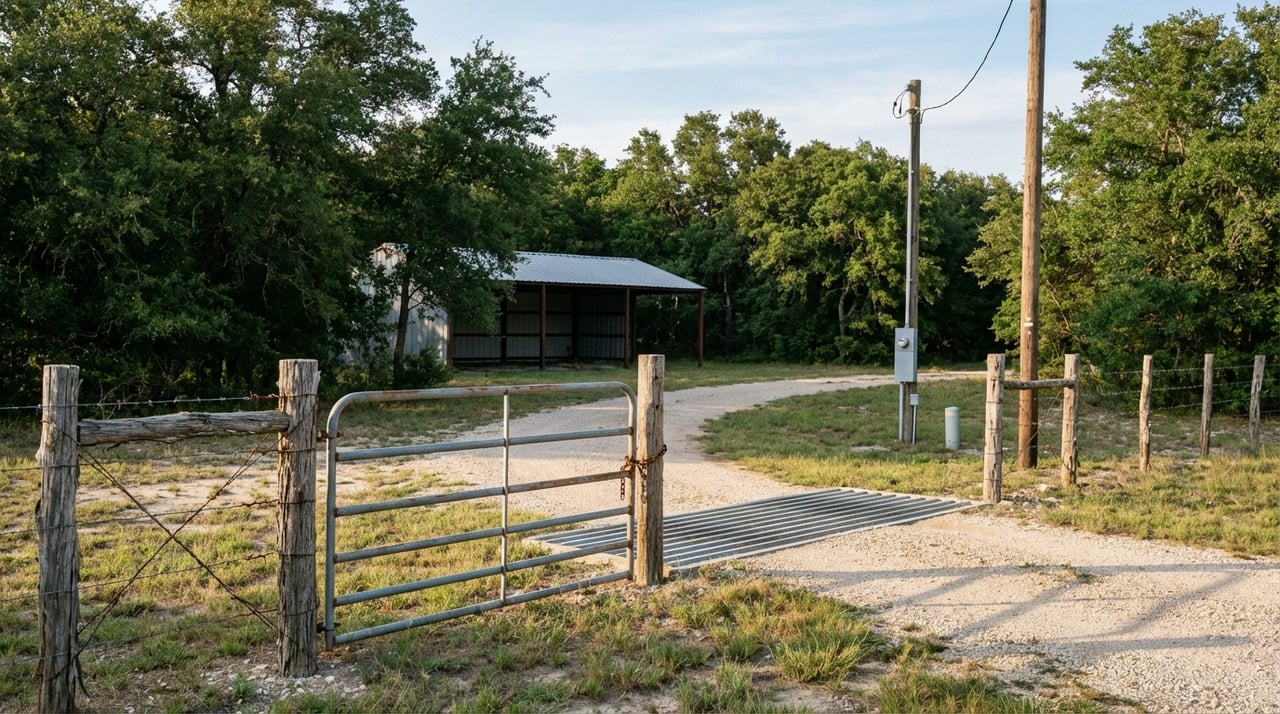
Good access is more than a pretty gate. Confirm you have legal, recorded access on title and know whether frontage is on a county road, a Farm-to-Market road, or a private drive. Frontage type affects who maintains the surface and what you need for culverts. Austin County requires a driveway and culvert permit for new entries on county roads, and TxDOT approval is needed for entries on state or FM roads.
Ask for the county 911 address assignment letter and make sure the driveway opening can accommodate emergency vehicles. Walk the road during or after rain if you can, and note seasonal conditions, low spots, and distance to the nearest paved route.
Checklist:
- Recorded access and any shared-drive agreements
- Frontage type and maintenance responsibility
- Driveway and culvert permit path
- Physical road condition in wet and dry weather
- 911 address assignment letter
Water: public supply or private well
Some tracts near New Ulm sit inside a small public water system’s certified area. For confirmation, verify service with the local supplier directly. Public filings for the New Ulm Water Supply Corporation appear in the state utility docket, which is a useful starting point when you are checking who serves a given road segment. You can reference the PUC Interchange filings for New Ulm WSC when you contact the utility. If public water is at the road, ask about tap availability, capacity, and connection fees.
If a private well is needed, know that much of Austin County falls within the Bluebonnet Groundwater Conservation District. Domestic wells are typically exempt from operating permits, but they still must be registered with the district. For new exempt wells, BGCD requires a Well Development Authorization before drilling starts. Review forms and classifications on the Bluebonnet GCD applications page.
Buyer tips for wells:
- Ask for the well log, pump test results, and any recent water quality test
- Confirm BGCD registration or permits for any existing well
- Budget for drilling, pump, power, and filtration if no well exists
Septic systems and permits
Most rural tracts near New Ulm rely on an on-site sewage facility. Austin County regulates OSSF systems and requires a Development Permit before you apply for OSSF. Expect to submit a site evaluation, design documents for alternate systems when needed, a maintenance contract for aerobic systems, a recorded affidavit for certain systems, a deed copy, and fees. Plan to submit OSSF paperwork 3 to 4 weeks before installation.
Start with the county’s OSSF application and get quotes from pros on the county’s registered sanitarians, evaluators, and installers list. If a property already has a system, request the prior permit and inspection records in your contract.
Land features, soils, and floodplain
Rolling terrain, hardwoods, ponds, and creek draws are common in the New Ulm area. These features add beauty and wildlife value, but they also guide where you can build and where a drain field can go. Ask for any existing topo or soils reports and identify both a primary and alternate drain field location before you finalize your house site.
Always confirm whether any portion of the tract lies within a FEMA flood zone. Austin County may require elevation certificates and floodplain development materials if you plan to build in a mapped hazard area. You can find floodplain and subdivision resources on the Austin County Permits page. If a parcel includes low areas or a creek crossing, consider a seasonal visit after a rain to see real drainage patterns.
Easements and utilities at the road
Many rural tracts include recorded easements for pipelines, power lines, or telecom routes. These show up in title and on plats. Ask the seller to disclose known easements and confirm with your title commitment. If electricity is not at the road, contact the provider early to estimate meter and line-extension costs. For internet, check whether fiber or fixed wireless is available on the frontage road and note any recorded telecom easements.
Checklist:
- Utility easements on title and survey
- Pipeline presence and right-of-way width
- Power availability and estimated connection costs
- Telecom options at the road
Mineral rights and surface protections
In Texas, mineral ownership can be separate from the surface. Do not assume a surface purchase includes minerals. If minerals were severed in the past, the mineral owner or their lessee may have rights to access the surface for development. Always require a written statement on whether minerals convey, and ask your title company to trace mineral reservations and leases. For a plain-English overview of split estates and why it matters, see this mineral rights primer. If minerals do not convey, consider negotiating surface-use protections.
Ag valuation, wildlife, and rollback risk
Texas’s open-space special appraisal, commonly called 1-d-1, can lower property taxes when land is primarily used for qualifying agricultural or wildlife management purposes. First-time applicants in many counties need evidence of prior qualifying use, often 5 of the last 7 years. If you plan a recreational or wildlife-focused property, a wildlife management valuation can be a practical conversion path, but it requires a written plan and periodic reporting. General guidance on timelines, applications, and rollback taxes is outlined in appraisal district resources such as this overview of 1-d-1 and rollback concepts.
Before you buy, ask the seller whether the land is currently under open-space or wildlife valuation, request documentation, and discuss potential rollback exposure if you change the use.
Your quick buyer checklist
Use this at showings and during your option period:
- Utilities and water
- Is service from a public supplier available or is a private well required? If public, confirm availability and tap fees. If well, request the well log, pump test, and recent water test.
- Septic
- Is there a permitted OSSF? Ask for permit and inspection records. If not, plan a site evaluation and review the county’s OSSF application.
- Access and culverts
- Verify deeded access, frontage type, and any shared-drive agreement. Confirm driveway and culvert permit path with the county.
- Floodplain and constraints
- Determine if any portion lies in a flood zone and whether an elevation certificate will be required for your planned build.
- Easements
- Identify pipelines, power, and telecom easements on title and survey.
- Minerals and title
- Do minerals convey? Request the deed language and a title commitment that addresses mineral ownership.
- Ag valuation status
- Is the property under 1-d-1 or wildlife valuation? Ask about reporting requirements and potential rollback taxes if use changes.
A simple timeline from contract to close
- Days 0 to 7: Receive seller disclosures and title commitment. Request any well logs, water tests, OSSF permits and inspections, and an existing survey if available.
- Days 7 to 21: Order a new survey if needed. Schedule a well pump test or water quality test. Hire a registered sanitarian for a site evaluation if you plan a home or cabin footprint. Call the county planning office to confirm permit steps for your use.
- Days 21 to 45: Get utility availability and connection estimates. Confirm BGCD well registration or plan for a Well Development Authorization. Consult your tax advisor about open-space or wildlife valuation implications.
- Day 45 and beyond: Wrap up inspections and negotiate any repairs or credits. Finalize financing and closing. If you plan to build, allow added time for permits and construction. OSSF permits are valid for one year from issuance, so line up your installer and inspections.
Who to call first
- Austin County Planning and Development: Development permits, OSSF, floodplain, driveway and subdivision questions. Start with the county’s Permits page.
- Bluebonnet Groundwater Conservation District: Well registration, exempt vs non-exempt guidance, and Well Development Authorization. See the BGCD applications.
- Austin County Clerk’s Office: Recorded deeds, easements, affidavits, and real property records for title research. Visit the County Clerk records page.
Ready to walk a tract or talk through the details for your goals, whether weekend or full-time use? Connect with a local team that knows the roads, the utilities, and the paperwork. Reach out to Bill Johnson Real Estate to explore available acreage and build a clear plan.
FAQs
What should I verify first when buying land near New Ulm?
- Start with access and utilities. Confirm deeded access and frontage type, then verify water source, power availability, and whether a septic permit exists or a new system will be required.
How do I confirm public water service for a New Ulm tract?
- Ask the seller who the supplier is and contact that utility to confirm tap availability and fees. Use state filings for New Ulm Water Supply Corporation as a reference when you reach out to the provider.
What is the septic permit process in Austin County?
- You will need a Development Permit first, then submit an OSSF application with a site evaluation and required attachments. Plan 3 to 4 weeks before installation and keep permits and inspections on file.
Do mineral rights usually come with rural acreage in Texas?
- Not always. Minerals can be severed from the surface, so require a clear seller statement and a title commitment that addresses mineral ownership. Negotiate surface-use protections if minerals do not convey.
How does a 1-d-1 agricultural valuation affect my taxes?
- A qualifying open-space or wildlife management valuation can reduce annual taxes. Confirm current status with documentation and discuss potential rollback taxes if you change the land’s use.