Dreaming about a little more land, a longer view, and some breathing room near Bellville? You are not alone, but country-home shopping here can look very different from buying a house on a standard in-town lot. If you want to choose wisely, you need to think beyond square footage and finishes. This guide will walk you through commute times, utilities, taxes, school verification, and rural property upkeep so you can compare Bellville-area options with clear eyes. Let’s dive in.
Understand Bellville-Area Property Types
One of the biggest surprises for buyers near Bellville is how quickly the property type can change from one search to the next. You may look at a home on a modest in-town lot, then tour an edge-of-town property, then end up standing on acreage that functions more like a true country tract.
Bellville’s zoning rules help explain that difference. In town, single-family districts have minimum lot sizes of 7,000, 12,500, and 22,000 square feet, while the agricultural district is intended for farming, ranching, and very low-density residential use. Parcels outside city limits can feel even more rural, with more land and fewer municipal services.
That matters because your day-to-day ownership experience can change a lot based on location. A smaller in-town property may be simpler to maintain, while a country home may offer more privacy and flexibility but also more responsibility.
Compare In-Town and Country Living
Before you fall in love with a porch view or a stand of trees, it helps to define what kind of ownership experience you actually want. Bellville-area buyers often do best when they compare lifestyle and logistics at the same time.
Here is the practical tradeoff many buyers face:
| Option | What You May Gain | What You May Need to Manage |
|---|---|---|
| In-town Bellville home | Municipal utilities, simpler infrastructure, smaller lot upkeep | Less land, closer neighbors, less rural feel |
| Edge-of-town property | More space, some rural feel, easier access to town | Utility setup and property features can vary |
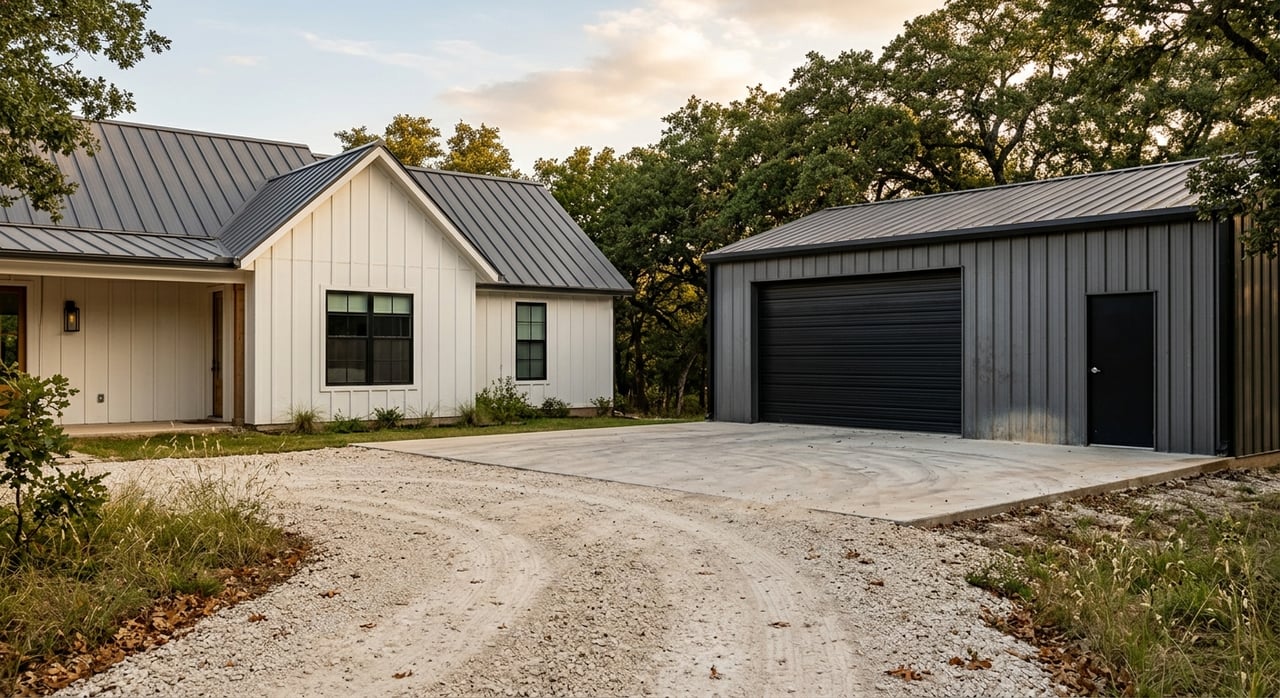
| Country home or acreage | Privacy, room for animals or outdoor use, wider-open setting | Well, septic, permits, drainage, culverts, more maintenance |
Neither option is automatically better. The right fit depends on how much land you want, how much upkeep you are comfortable with, and how often you need to get into Bellville or beyond.
Think Hard About the Commute
A country home can feel peaceful on a Saturday morning, but the drive still matters on Monday. Bellville is reasonably connected to several nearby areas, yet not every regional commute is equally practical.
The Bellville EDC master plan lists approximate drive times from Bellville as:
- Sealy: 17 minutes
- Hempstead: 21 minutes
- Brenham: 27 minutes
- College Station: 1 hour 13 minutes
- Houston: 1 hour 13 minutes
- Austin: 2 hours 5 minutes
For many buyers, that makes Bellville a realistic option if you want more space while staying connected to places like Brenham, Sealy, or even parts of the Houston area. Austin, however, is much farther, so if regular Austin commuting is part of your plan, you should weigh that distance carefully.
Check Whether the Home Is Inside City Limits
This is one of the most important questions you can ask early. A property inside Bellville city limits often comes with a very different utility and permitting picture than one outside town.
Inside city limits, the City of Bellville owns electric, gas, water, wastewater, and sanitation services. The city also requires a utility application and deposit before connection, which creates a relatively straightforward path for many in-town homes.
Outside city limits, country properties are more likely to involve private infrastructure. That can mean a private well or public water supply connection, septic system requirements, and county-level permit steps tied to development, floodplain review, culverts, and 911 addressing.
In simple terms, more land often means more systems to evaluate. That is not a reason to avoid a country home, but it is a reason to ask better questions before you buy.
Review Well and Water Responsibilities
If the property uses a private well, water quality and maintenance should be part of your decision. A well can work very well for country living, but it needs ongoing attention.
Texas A&M AgriLife advises private-well owners to test water annually, keep pollutants away from the well, and have the well mechanism checked periodically by a qualified driller or pump installer. It also notes that wells downhill from septic systems or livestock facilities may face higher contamination risk.
Well depth can matter too. Texas A&M says deeper wells are generally safer than shallow wells, which is another reason to review the property’s water setup closely during due diligence.
Understand Septic System Upkeep
For many Bellville-area country homes, septic maintenance is simply part of ownership. If you are used to municipal wastewater service, this is one area where rural living can feel different fast.
Texas A&M says proper septic operation and maintenance are critical. Tanks should be cleaned before sludge reaches the outlet device, typically every two to three years, and the soil-treatment area should be protected from driveways, storage buildings, and heavy equipment.
Austin County adds more practical steps. Septic applications require a site evaluation, and aerobic systems require a maintenance agreement. If you plan to build, add improvements, or move a structure onto the property, development permits may also be required first.
Watch for Floodplain and Drainage Issues
Country buyers often focus on the house, barn, or view first. Smart buyers also study drainage, flood risk, and access before getting emotionally attached.
Austin County’s permit guidance separates floodplain, development, culvert, and 911-address steps, which shows how important site conditions can be. If a parcel is in a flood-hazard area, an elevation certificate is needed before a permit is issued.
FEMA also notes that flood maps help owners understand how a property relates to higher-risk flood areas and that flood risk can occur almost anywhere. In practical terms, you should review flood risk, drainage patterns, and any culvert needs early in the process, not at the very end.
Do Not Assume School Assignment
If school attendance is part of your decision, treat it as address-specific from the start. In the Bellville area, school assignment should never be assumed from the city name alone.
Bellville ISD’s official site shows five campuses: Bellville High School, Bellville Junior High, O'Bryant Primary, O'Bryant Intermediate, and West End Elementary. The district reports 2,302 enrolled students.
Just as important, the Texas Education Agency says school-district boundary maps are approximations for general information only and should not be used to determine attendance zones. Buyers should verify campus assignment directly with the district for the specific property address.
Know the Tax Difference Between Homestead and Ag Appraisal
Tax questions come up often with country homes, especially when acreage is involved. One of the biggest misunderstandings is assuming that any small tract with a house will automatically qualify for agricultural tax treatment.
Austin CAD states that a homestead exemption reduces taxable value, applies to one principal residence in Texas, must be filed by May 1, and does not require a filing fee. That is separate from open-space or agricultural appraisal.
Austin CAD also says open-space or ag appraisal is not an exemption. The land must actually be used agriculturally, and a change in use can trigger rollback taxes for the prior three years.
The county’s agricultural guidelines make the point even clearer. Small acreage with a residence is generally treated as primarily residential or commercial, and gardens, chickens, or recreational use do not qualify by themselves.
Questions to Ask Before You Buy
When you tour a country home near Bellville, a practical checklist can keep you grounded. The goal is not to kill the dream. It is to make sure the dream fits your budget, lifestyle, and comfort level.
Ask questions like these:
- Is the property inside Bellville city limits or outside them?
- Are utilities municipal, well-based, septic-based, or a mix?
- Has the well been tested and maintained regularly?
- What type of septic system is installed, and what maintenance records are available?
- Are there floodplain, drainage, or culvert concerns?
- Has a 911 address been assigned if needed?
- What permits would be required for future improvements?
- Does the current tax treatment reflect a homestead, open-space appraisal, or standard residential use?
- If agricultural appraisal is in place, what supports it?
- Which school district and campus serve the exact address?
- How does the drive feel at the times you would actually travel it?
Match the Property to Your Real Life
The best country home near Bellville is not always the one with the most acreage or the prettiest setting. It is the one that fits how you really live.
If you want a simpler setup with easier utility service, an in-town or edge-of-town home may be the better match. If you want room to spread out and understand the responsibilities that come with wells, septic systems, access, and land use, a true country property may be exactly what you are after.
A local, property-by-property approach matters here. Bellville-area real estate is full of variety, and the details behind each tract can make all the difference.
If you want experienced local guidance as you compare in-town homes, ranchettes, or full country properties near Bellville, Bill Johnson Real Estate is here to help you sort through the details and buy with confidence.
FAQs
How far is Bellville from Houston, Brenham, and Austin?
- Approximate drive times from Bellville are 1 hour 13 minutes to Houston, 27 minutes to Brenham, and 2 hours 5 minutes to Austin.
What utilities should you expect in a Bellville country home?
- Inside Bellville city limits, homes often have city electric, gas, water, wastewater, and sanitation service. Outside city limits, properties are more likely to involve wells, septic systems, and county permit requirements.
How do you verify school assignment for a Bellville-area address?
- Verify the exact address directly with the school district because attendance areas are address-specific and state boundary maps are only approximate.
Can a small acreage near Bellville qualify for agricultural appraisal?
- Not automatically. Austin CAD says land must actually be used agriculturally, and small acreage with a residence is generally treated as primarily residential or commercial unless it meets qualifying standards.
What maintenance comes with a well and septic system near Bellville?
- Private wells should be tested annually and checked periodically by a qualified professional. Septic systems need proper upkeep, and tanks are typically cleaned every two to three years before sludge reaches the outlet device.
Why should Bellville country-home buyers check floodplain and drainage early?
- Flood risk can affect permits, improvements, and long-term ownership. Austin County also separates floodplain and culvert review in its permit guidance, so early review can help you avoid surprises.