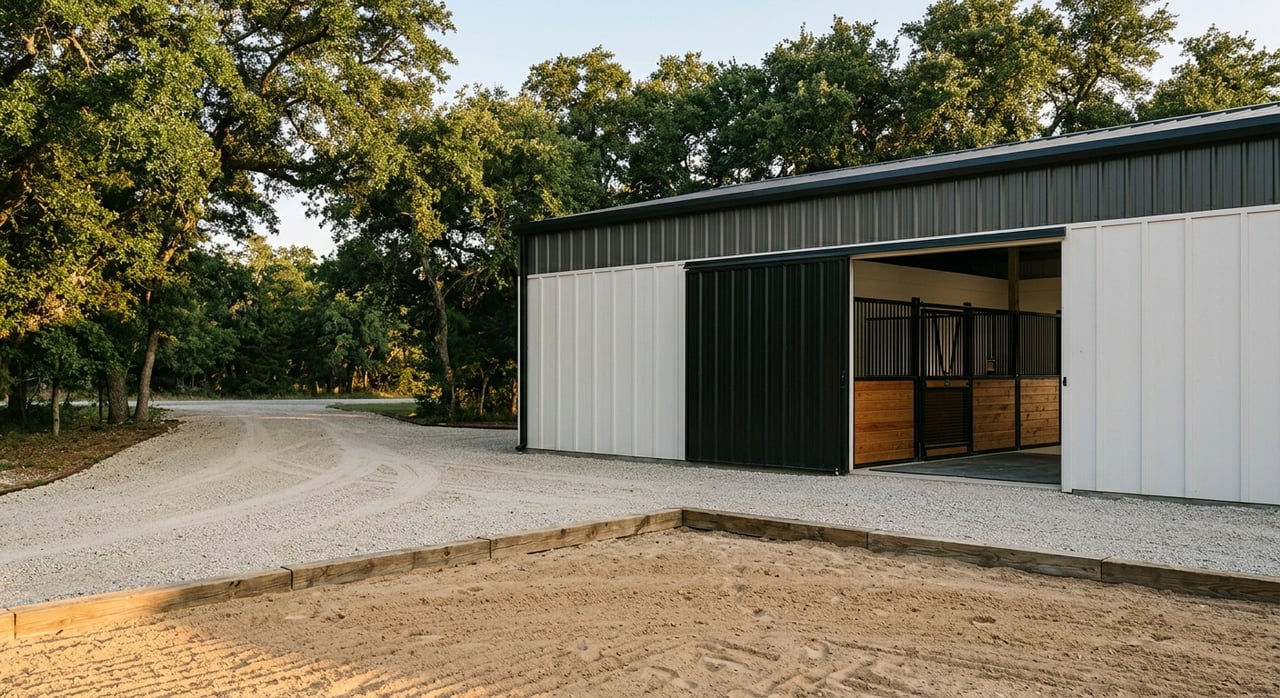
If you are looking for a horse property or hobby farm near New Ulm, it is easy to focus on the house, the barn, or the view first. But in this part of Austin County, the land itself often tells the real story. If you know what to check before you buy, you can avoid costly surprises and find a property that truly fits the way you want to live and use the land. Let’s dive in.
Start with the ground
Near New Ulm, parcel-to-parcel differences can be significant. This is a rural area in western Austin County, and factors like soil, drainage, and access can vary a lot even between nearby tracts.
That is why the first question is not always how pretty the pasture looks. It is whether the ground can handle horses, equipment, and day-to-day use without turning into a maintenance problem.
Why New Ulm soil matters
The USDA’s Newulm soil series was established in Austin County and is named for New Ulm. It is described as very deep, well drained, and moderately slowly permeable, formed in sandy and loamy sediments, and it is used mainly for rangeland with some improved pasture.
That is encouraging for buyers who want turnout space, grazing potential, or room for a small hobby farm. Well-drained upland ground is usually the safer starting point for barns, paddocks, and heavy-use areas.
Not all acreage drains the same
Austin County also includes soils with very different limits. The USDA’s Sealy soil series is poorly drained and can have seasonal saturation in late winter and spring, which can lead to muddy conditions and make horse turnout harder without improvements.
The takeaway is simple: do not assume a whole area will perform the same way just because it is in the same county. A property near New Ulm should be evaluated tract by tract, especially if you plan to keep horses or rely on the land for regular grazing.
Look at pasture use realistically
A good horse property does not always need perfect improved pasture on day one. But you do want to know whether the acreage is set up for practical grazing, how much work it may need, and whether your expectations match the land.
For many buyers, that means thinking beyond green grass and asking what species are growing there, how the soil supports them, and what kind of maintenance the pasture will require.
Common pasture options for sandy soils
Texas A&M AgriLife notes that sandy soils often have good drainage and aeration, but they usually have low natural fertility and lower water-holding capacity. In those conditions, bermudagrass and bahiagrass are common choices for equine grazing.
Bermudagrass is a major warm-season perennial grass for improved pastures in Texas. It can provide high-quality forage, but it tends to perform best with proper variety selection, soil preparation, and fertility management.
Bahiagrass can be a practical option if you want a lower-maintenance pasture. AgriLife describes it as hardy in sandy soils and lower-fertility conditions, though it is generally lower-yielding and somewhat lower in forage quality than hybrid bermudagrass.
What unimproved acreage may need
Newulm soils are associated with native prairie grasses and legumes on well-drained uplands. That can make raw or lightly improved acreage usable for grazing, but it may still need brush control, fertility work, and rotational management to stay productive.
If a tract has been lightly managed for years, you may be buying potential rather than a finished setup. That is not a bad thing, but it helps to price in the work needed to make the pasture function the way you want.
Soil testing is worth it
Before renovating pasture, overseeding, or making major fertilizer decisions, soil testing can give you a much clearer picture. Texas A&M AgriLife’s Soil, Water and Forage Testing Laboratory provides research-based soil and forage analysis and fertilizer recommendations.
For a buyer, that can help answer practical questions early. You can get a better sense of whether the land needs fertility correction, pasture changes, or a more modest grazing plan.
Inspect horse improvements carefully
A property may look horse-ready at a glance and still need meaningful work. Barns, gates, alleyways, and riding areas all need to function safely, not just photograph well.
That is especially important near New Ulm, where drainage and heavy-use areas can make or break how useful a tract really is.
Check fencing and gate widths
Safe horse fencing should be visible, durable, and practical to use. Gate width matters more than many buyers expect.
Extension guidance recommends gates at least 4 feet wide for horse passage and 8 feet wide if equipment also needs to pass. If you expect tractors, mowers, fertilizer trucks, or wagons to move through pasture gates, 14 to 16 feet is the more functional standard.
If gates are too narrow, everyday chores become harder. That can affect hauling, mowing, manure management, and emergency access.
Evaluate barn layout and floors
A barn is not just about stall count. Layout and drainage matter just as much.
Extension guidance says alleyways between stalls should provide at least 10 feet of width for convenience, safety, and horse traffic. A single-row stall face can work at 6 feet, but it is tighter and usually less convenient.
Stall and barn floors should also be able to drain properly. Good stall floors are typically built on a well-drained base and raised 8 to 12 inches above outside ground level, which helps with moisture management and daily maintenance.
Do not overlook arena drainage
If a property includes an outdoor arena, do not judge it only by the top surface. Arena footing works as a system that includes the sub-base, base, and riding surface.
A well-drained design may include a 1% to 2% crown or another drainage approach that moves water off the arena. Sand is commonly used because it drains well and can help reduce dust.
In practical terms, a tract with attractive open ground may still need grading, drainage, or footing improvements before it is truly horse-ready. That is especially true in heavy-use areas or on lower ground.
Access can be a deal-breaker
When you are buying a hobby farm or horse property, access is not just about convenience. It affects whether you can comfortably haul horses, bring in hay and feed, or move equipment in wet weather.
A great tract can become frustrating fast if the driveway, lane, or entrance is too narrow, too soft, or poorly drained.
Why driveway drainage matters
Austin County’s subdivision and drainage regulations require lots to be graded with positive drainage. The county also sets minimum standards for culverts and drainage easements, and driveway culverts must be designed for at least a 5-year storm.
That tells you something important as a buyer. If access has not been built or maintained with drainage in mind, a property may become harder to use after heavy rain.
Trailer access should fit your plans
If you plan to haul horses regularly, pull a stock trailer, or bring in equipment, look carefully at turning room and lane condition. A narrow or soft entrance may work for a pickup on a dry day and still be a problem for trailer traffic over time.
This is one of those details that is easy to miss during a short showing. But for daily rural use, it can have a big effect on how well the property serves you.
Verify flood risk by address
Flood risk should never be treated as a guess or a casual comment. FEMA’s Flood Map Service Center is the official public source for flood hazard information, and maps are updated over time.
That means it is smart to verify a tract by address instead of relying on general descriptions. Even nearby parcels can have different flood map impacts, especially in rural areas with changing topography and drainage patterns.
Understand ag-use expectations
If agricultural appraisal treatment is part of your long-term plan, it is important to review Austin County’s own guidelines early. Small acreage with a residential structure is considered primarily residential, so agricultural use must be the primary use to qualify.
Austin County states that 1 horse equals 1.5 animal units. The county also notes that a typical livestock operation generally needs at least 5 animal units for most of the year, with pasture capacity estimated at about 1 animal unit per 4 acres on good pasture, 1 per 6 acres on average pasture, and 1 per 10 acres on poor pasture.
That does not mean every buyer needs a large cattle-style setup. It does mean you should match your acreage, pasture quality, and land-use plans with the county’s standards before making assumptions.
Quick signs a property may fit
When you are touring horse properties and hobby farms near New Ulm, a few practical signs usually stand out right away.
Common green flags include:
- Well-drained upland soil
- Pasture that matches the tract’s soil and maintenance level
- Wide, usable gates
- Barn floors with drainage in mind
- Easy truck and trailer access
Common warning signs include:
- Standing water after normal rainfall
- Poor drainage around barns or pens
- Undersized gates
- Low-lying areas needing major earthwork
- Heavy-use areas with soft or failing ground
Why local guidance helps
Rural properties ask different questions than a typical in-town home. Soil, access, pasture use, drainage, and agricultural considerations all shape whether a property will work for your goals.
That is why local, property-level guidance matters so much near New Ulm. When you are comparing horse properties or hobby farms, it helps to work with a team that understands how Austin County land actually performs on the ground.
If you are ready to explore horse properties and hobby farms near New Ulm, Bill Johnson Real Estate can help you evaluate the land, the improvements, and the practical details that matter most.
FAQs
What should you check first on a horse property near New Ulm?
- Start with soil and drainage. In this area, well-drained upland ground is usually a better fit for barns, paddocks, and turnout than low, seasonally wet areas.
What pasture grasses work well for horse properties near New Ulm?
- Bermudagrass and bahiagrass are common options for sandy soils. Bermudagrass can offer higher-quality forage with proper management, while bahiagrass is often a lower-maintenance choice.
What gate size is useful for a hobby farm near New Ulm?
- A gate should be at least 4 feet wide for horse passage and 8 feet wide if equipment needs to pass. For tractors, mowers, and wagons, 14 to 16 feet is often more practical.
How can you check flood risk for land near New Ulm?
- Verify the tract by address using the official FEMA flood hazard map source rather than relying on a seller’s general description.
Can a small horse property near New Ulm qualify for agricultural appraisal treatment?
- It depends on how the land is used and whether agricultural use is the primary use under Austin County guidelines. Acreage, pasture quality, and stocking levels all matter.