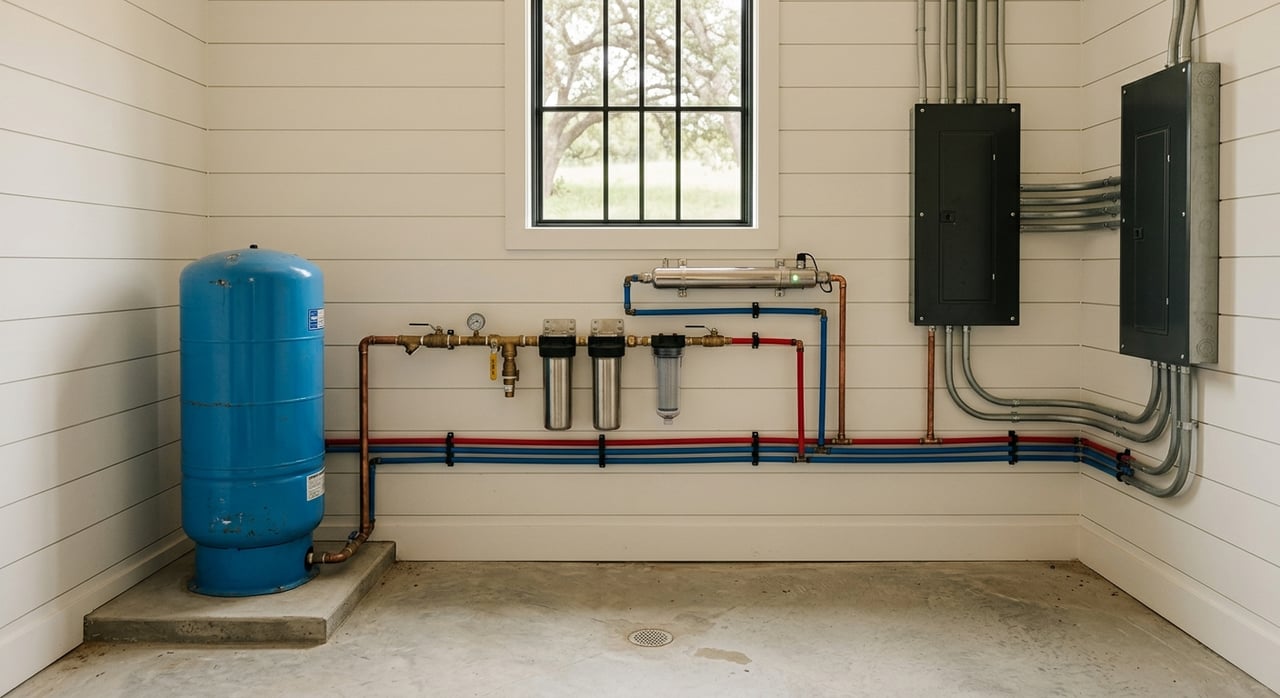
If you are shopping for acreage around New Ulm, the land itself is only part of the story. A beautiful tract can still come with expensive surprises if you do not understand the well, pond, septic, and electric setup from the start. This guide will help you ask better questions, spot common issues early, and make a more confident decision before you close. Let’s dive in.
Why utilities matter on acreage
In the New Ulm area, rural property often depends on private infrastructure instead of city services. That means your water supply, wastewater system, and electric service may all work very differently than they would on an in-town property.
Austin County makes that reality clear in its subdivision rules. If a property relies on a private water supply, that responsibility falls to the buyer at the buyer’s own risk and expense. For acreage buyers, that makes due diligence on utilities just as important as fences, road frontage, and the lay of the land.
Start with the water well
A private well is one of the first things to review on New Ulm-area acreage. Even though Texas does not set a statewide minimum acreage requirement for a private well, local entities and groundwater conservation districts may have their own rules.
Austin County is within the Bluebonnet Groundwater Conservation District. In this district, private domestic and agricultural wells may be exempt from operating permits, but they still must be registered, and authorization is required before drilling, re-boring, capping, plugging, or modifying a well.
What to ask about a well
When you walk a property, ask for the paper trail as much as the physical location. The most useful records often include:
- Driller’s log
- Well depth
- Age of the well
- Pump history
- Details on any treatment equipment
- A recent water test
Texas A&M AgriLife recommends that private well owners keep records and test water at least once a year. If a seller has current records and a recent test, that usually gives you a much clearer picture of how the system has been maintained.
Check district filings and well reports
In the Bluebonnet district, buyers should also ask whether all required filings are complete. The district notes that even exempt wells must be registered, and it references a well-log deposit for new or re-bored wells.
If the seller cannot produce older records, you may still be able to locate historical information through Texas Water Development Board and TCEQ well report databases. That can help confirm details like drilling history and prior well information.
Do not ignore old or unused wells
An abandoned well may look harmless, but it should be treated as a serious due-diligence item. Texas A&M AgriLife says landowners are responsible for plugging abandoned wells and recommends checking with the local groundwater conservation district or a licensed well contractor.
If you see an old windmill site, a capped pipe, or a depression where a well may have been, ask follow-up questions. It is much better to understand that issue before closing than after you take ownership.
Understand ponds and stock tanks
A pond can add beauty and function to acreage, but not every pond is the same. Around New Ulm, a water feature might be a dug stock tank, a runoff pond, or a dammed impoundment, and those differences matter.
Texas A&M AgriLife’s pond resources focus on water testing, aquatic vegetation, fish and predator balance, and leak repair. TCEQ’s Dam Safety Program also monitors both private and public dams, so a pond with a dam component may require more careful review.
Key questions to ask about a pond
Before you assume a pond is a low-maintenance bonus, ask practical questions such as:
- How does the pond fill during dry weather?
- Has it had leak issues?
- Does the dam or spillway show erosion or settlement?
- Has it ever been dredged?
- Has it been stocked, fertilized, or treated for vegetation?
These details affect ongoing maintenance, usability, and cost. A pond that holds water well and has a clear maintenance history is very different from one that constantly drops, overgrows, or needs repair work.
Creeks, dams, and extra review
If the pond connects to a creek or stream, or if the owner has built or changed a dam, pause and verify the setup. TCEQ notes that surface-water rights or dam-safety review may apply in those cases.
That does not automatically mean there is a problem. It simply means you should not assume every private pond is a simple stock tank without asking a few more questions.
Review the septic system carefully
On acreage, septic due diligence should go hand in hand with well due diligence. If you are relying on private water and a private wastewater system, both need to make sense for the property and your planned use.
TCEQ says an On-Site Sewage Facility permit and approved plan are required to construct, alter, repair, extend, or operate a septic system. The site must also be evaluated by a licensed site evaluator or professional engineer. Austin County’s permit application reflects this process and asks whether the property uses a private well or public water supply.
What to locate on site
When you tour the property, do not stop at asking, “Does it have septic?” Try to identify the actual components and gather service history. Key items include:
- Septic tank location
- Cleanouts
- Drainfield location
- Date of the last pumping
- Service records
- Inspection records
This is one of the fastest ways to spot a system that may be overdue for maintenance. A seller who knows where the components are and has records available can make your review much easier.
Aerobic and drip systems need extra attention
Austin County notes that aerobic treatment units are not required by the county, but some properties do have aerobic or drip-type systems. If that is the case, ask whether there is an active maintenance contract in place.
TCEQ notes that secondary-treatment and drip systems can require inspection by a valid maintenance company every four months, or homeowner maintenance where allowed. Before closing, you want to know what type of system is in place and what level of upkeep it requires.
Confirm electric service early
Electric service can be one of the biggest hidden variables on rural acreage. A tract may have power nearby, but that does not always mean the meter location, trenching, easements, and extension costs are already resolved.
Bluebonnet Electric Cooperative serves Austin County as part of its Central Texas service territory. Its homeowner guidance for new underground service makes clear that easements, trench inspections, conduit installation, and service responsibilities all matter.
Questions to ask about power
Early in your option period, ask direct questions like these:
- Is there already a meter on the property?
- Is there an existing transformer or pole?
- How much of the service extension is already built?
- Where do utility easements run?
- Will the driveway, trench, or road crossing require extra work?
Bluebonnet’s guidance also notes that members must confirm easements, call Texas811 before digging, install required conduit and related materials, and keep the trench open for inspection before backfilling. It also states that the service wire and labor from the service point to the meter are the member’s responsibility.
Long driveways can change the budget
A long private road may be part of the charm of country property, but it can also add cost and complexity. If power has to travel a long distance from the road to the homesite, the line extension and trenching details can have a real impact on your budget and build plans.
That is why electric review should happen early, not at the end. On acreage, buildability often depends on how all of these pieces work together.
A simple acreage utility checklist
When you are comparing properties around New Ulm, it helps to keep your review practical and consistent. Use a checklist like this during showings and follow-up conversations.
Well checklist
- Ask for the driller’s log and well depth
- Request pump history and age
- Ask for a recent water test
- Confirm whether treatment equipment is installed
- Verify Bluebonnet Groundwater Conservation District filings
- Ask about any old or abandoned wells
Pond checklist
- Identify whether it is a stock tank, runoff pond, or dammed impoundment
- Ask how it fills and holds water
- Look for erosion, settlement, or leak concerns
- Ask about dredging, stocking, fertilizing, or vegetation treatment
- Confirm whether creek connection or dam review may apply
Septic checklist
- Locate the tank, cleanouts, and drainfield
- Ask when the system was last pumped
- Request service and inspection records
- Confirm the system type
- Verify any required maintenance contract for aerobic or drip systems
Electric checklist
- Confirm meter status
- Ask about existing poles or transformers
- Review easements and access route
- Ask what extension work remains
- Consider trenching and long-driveway costs early
Why local guidance helps
Acreage purchases often look simple on the surface. Then you start sorting through well registration, septic records, pond questions, and utility easements, and you realize how much local knowledge matters.
That is especially true in the New Ulm area, where many properties rely on private systems and no two tracts are exactly alike. A steady, practical review can help you avoid surprises and focus on land that truly fits your plans.
If you are buying or selling acreage around New Ulm, working with a brokerage that understands rural property can make the process a lot more straightforward. Bill Johnson Real Estate brings decades of Austin County experience and hands-on local knowledge to the details that matter on country property.
FAQs
What should you ask about a private well on New Ulm acreage?
- Ask for the driller’s log, well depth, pump history, well age, treatment equipment details, a recent water test, and confirmation that required Bluebonnet Groundwater Conservation District filings are complete.
How often should private well water be tested in Texas?
- Texas A&M AgriLife recommends that private well owners test their water at least once a year and keep good records.
What should you check about a pond on Austin County acreage?
- Ask how the pond fills, whether it leaks, whether the dam or spillway shows erosion or settlement, and whether it has been dredged, stocked, fertilized, or treated for vegetation.
What septic records should you request before buying rural property?
- Ask for the septic permit information, system type, pumping history, service records, inspection records, and the locations of the tank, cleanouts, and drainfield.
Why should electric service be reviewed early on acreage near New Ulm?
- Electric service can affect budget and buildability because easements, trenching, meter placement, and line extension work may still be needed, especially on tracts with long private access roads.