Trying to decide between wooded land and open acreage near New Ulm? You are not alone. Many buyers picture one or the other, but in this part of Austin County, both can make sense depending on how you plan to use the property. If you want to buy with more clarity and fewer surprises, it helps to understand how the land naturally works here. Let’s dive in.
Land Near New Ulm Has a Natural Mix
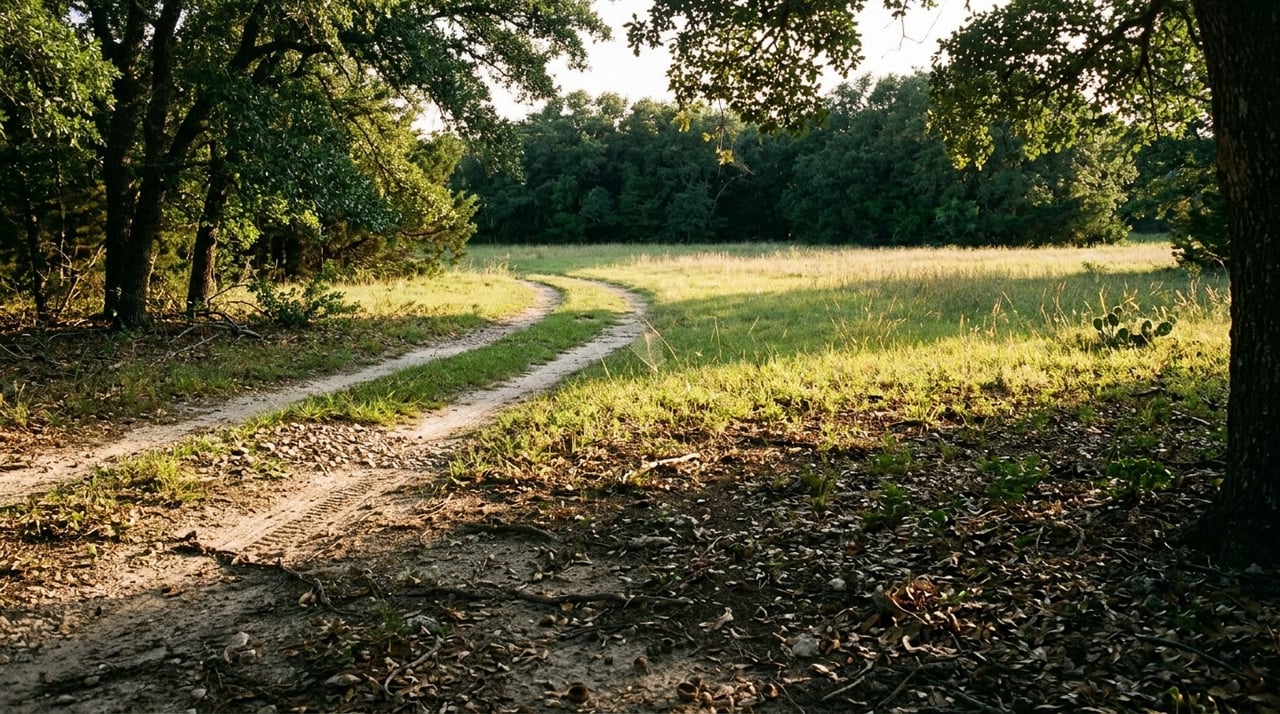
Near New Ulm, the landscape is not strictly treed or strictly open. Texas Parks & Wildlife describes this area as part of the Post Oak Savannah, which is a transition zone with scattered oaks, grassland views, and pockets of woodland.
That means both open pasture and wooded tracts are part of the local pattern. The USDA Newulm soil series, established in Austin County, also describes native vegetation here as open savannah with post oak and blackjack oak. In simple terms, mixed land is normal around New Ulm.
Climate also shapes how land feels and functions. Nearby NOAA climate normals show average highs in the mid-90s during July and August, and annual rainfall around 45 to 48 inches at nearby stations. So this is a warm, productive area where both grass and tree cover can play an important role.
Wooded Land Near New Ulm
Why wooded acreage appeals to buyers
Wooded tracts often stand out if you want privacy, shade, and a more tucked-away feel. They can also be a strong fit for recreational use, trail walking, and buyers who want land with natural cover.
Texas A&M Forest Service notes that forest management can support habitat for deer and songbirds. Wooded and streamside buffers can also provide travel corridors and habitat value. For many buyers, that makes wooded acreage appealing for a retreat-style property or a recreation-focused purchase.
Shade is another practical benefit. With summer highs in the mid-90s, tree cover can make parts of a property more comfortable to use. Texas Parks & Wildlife also notes that in the Post Oak Savannah, livestock can use wooded areas outside stress periods, and shade-tolerant grasses may be grazed there.
What wooded land can require
Wooded land usually asks more of you in maintenance. In the local Post Oak Savannah, Texas Parks & Wildlife notes that when fire is suppressed and grazing is heavy, areas can shift toward denser brush with species like yaupon and eastern redcedar.
That matters because denser vegetation can increase the need for brush control and cleanup. Texas A&M Forest Service also explains that vegetation type, density, and arrangement affect wildfire behavior. If you buy wooded acreage, you may need to think more about deadfall, brush management, and defensible space around any home, barn, or other improvement.
Wooded land and grazing capacity
If livestock is a main goal, wooded acreage is often less efficient than open ground. Texas Parks & Wildlife guidance for the region suggests about 1 animal unit per 50 to 75 acres on wooded areas.
By comparison, the same guidance suggests about 1 animal unit per 8 to 15 acres on native grass and about 1 animal unit per 3 to 6 acres on tame pasture. That does not make wooded land a poor choice. It simply means woods are usually a lower-capacity grazing resource than open pasture.
Open Land Near New Ulm
Why open pasture fits many buyers
Open acreage is often the easier choice if you want visible space and simpler day-to-day use. It usually works well for grazing, riding, equipment movement, and planning a homesite with broad views.
In this region, open pasture is a familiar land type. Texas Parks & Wildlife describes the historic landscape as tall-grass savannah with occasional trees, and Austin County agricultural-use guidelines reflect that open pasture is a common and expected category of land use.
Open ground can also make practical tasks more straightforward. Fences, drainage patterns, livestock movement, and access routes are often easier to see and manage when the land is more open.
Open pasture and livestock use
If your main priority is cattle, horses, hay production, or a hobby-farm setup, open acreage often has the edge. The local stocking guidance from Texas Parks & Wildlife shows that grass-based land supports much tighter stocking rates than wooded tracts.
That is one reason many buyers focused on agricultural use prefer land with more open pasture. In the Post Oak Savannah, grazing management and fire historically helped maintain that open character.
What open land gives up
Open land does come with tradeoffs. It usually offers less natural screening and less tree cover than wooded acreage.
You may also need ongoing brush management if you want the property to stay open over time. In this part of Texas, the local ecology naturally tends toward a savannah or woodland mix, so open ground does not always stay open without active management.
Wooded vs. Open: Which Fits Your Goals?
The best choice usually comes down to the main job of the land. Before you focus on appearance, think about how you want to use the property most of the time.
Here is a simple way to compare the two:
| Land Type | Usually Best For | Main Benefits | Main Tradeoffs |
|---|---|---|---|
| Wooded acreage | Privacy, recreation, wildlife cover, retreat feel | Shade, screening, habitat, trails | More brush control, more cleanup, lower grazing capacity |
| Open acreage | Grazing, riding, homesites, visible space | Easier circulation, broader views, stronger livestock efficiency | Less shade, less screening, ongoing brush management to keep it open |
Many of the most versatile tracts near New Ulm combine both. You might see open areas around a homesite, barn, or pasture, with trees left along boundaries, drainage areas, or natural screening lines.
That kind of mix fits the local savannah pattern well. It can also give you a balance of usability, comfort, and privacy without forcing you into an all-or-nothing choice.
Do Not Assume Tax Valuation Follows Land Type
One of the biggest mistakes buyers make is assuming that raw land automatically qualifies for special valuation because it is open, wooded, or undeveloped. Austin County Appraisal District states that land does not qualify for agricultural or open-space valuation just because it is raw or unused.
Instead, the property must actually meet the county’s use and intensity requirements. The district also notes that recreational use, home gardens, and similar personal uses do not qualify as agricultural use.
That matters whether you are looking at wooded land or open pasture. A beautiful tract with grass, trees, or wildlife is not enough by itself.
The county also notes that changes in use can trigger rollback tax liability. So if tax treatment is part of your buying decision, it is smart to ask specific questions early rather than make assumptions based on appearance alone.
Wildlife Valuation Needs Active Management
Buyers are often drawn to wooded acreage for wildlife value, and that can be a real strength. But if you are expecting a wildlife-management appraisal, Austin County Appraisal District says the property must have a qualifying management plan and active practices.
In other words, having trees and seeing deer on the property is not the same as qualifying for wildlife valuation. This is especially important near New Ulm, where wooded land can be highly appealing for recreational use but still needs a real management framework for that tax classification.
A Practical Way to Choose
If you are still torn, start with three basic questions:
- Do you want the land mainly for grazing, horses, or a homesite with long views?
- Do you want the land mainly for privacy, recreation, and natural cover?
- Do you want a blend of both that gives you usable open space and wooded screening?
For many buyers near New Ulm, the answer is the third option. A mixed tract often delivers the most flexibility because it reflects the way this landscape naturally works.
The bottom line is simple. Wooded land near New Ulm usually offers more privacy, shade, and habitat, while open land usually offers easier grazing, clearer visibility, and simpler daily use. The right fit depends on what you want the property to do for you.
When you are comparing acreage in Austin County, local context matters. A property may look ideal at first glance, but the best choice usually comes from matching the land’s layout, cover, and management needs to your long-term goals. If you want help sorting through wooded tracts, open pasture, or a property that blends both, Bill Johnson Real Estate is here to help.
FAQs
What is the natural land pattern near New Ulm, Texas?
- Near New Ulm, land is commonly a mix of open savannah and woodland, which fits the Post Oak Savannah landscape described by Texas Parks & Wildlife and the USDA Newulm soil series.
Is wooded land or open land better for livestock near New Ulm?
- Open land is usually better for livestock efficiency, since Texas Parks & Wildlife guidance for the region shows stronger stocking rates on native grass and tame pasture than on wooded areas.
Why do buyers choose wooded acreage near New Ulm?
- Buyers often choose wooded acreage for privacy, shade, wildlife cover, and a more secluded feel, especially if recreation or a retreat-style property is a priority.
Does open land near New Ulm stay open on its own?
- Not always. In the local Post Oak Savannah, open land often needs active brush management over time because the landscape naturally trends toward a savannah or woodland mix.
Does wooded or open land automatically qualify for ag valuation in Austin County?
- No. Austin County Appraisal District states that land must meet actual county use and intensity requirements, and raw, open, wooded, or undeveloped land does not qualify automatically.
Can wooded land qualify for wildlife valuation in Austin County?
- Yes, but only if it meets county requirements for a qualifying wildlife-management appraisal, including a management plan and active practices.